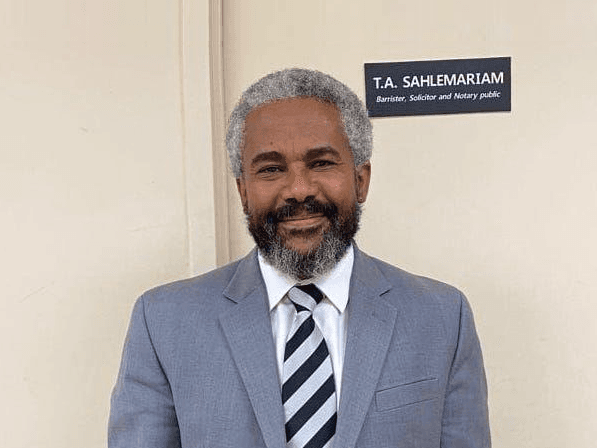
On the 10th anniversary of my call to the Law Society of Ontario, I share my reflections on the legal profession through an interview with a young student.
Nani is my friend's daughter, and she will be turning 16 this October. She's currently a Grade 10 student. A few days ago, she sent me this message:
Hi Tekle, it's Nani. I was wondering if you could help me with an assignment for school. The assignment is to interview an attorney, and I tried contacting attorneys in Kansas, but they didn't respond. So, if you could send me your email, that would be great. Thank you so much!
I responded, "Sure, go ahead and send me the questions". After she sent them, with the help of my assistants, I answered her questions. Since this also marks the 10th anniversary of my call to the Law Society of Ontario, I thought sharing my answers with the public might be a nice way to commemorate the occasion.
Q: Tell me a little about yourself and what made you practice this kind of law; did it have to do with your upbringing?
A: My name is Teklemichael Abebe Sahlemariam, and I'm a Toronto-based lawyer practicing immigration law, family law, and criminal law. I'm originally from Ethiopia and arrived in Canada as a refugee in 2005. I was called to the bar or became a lawyer in September 2014, and this month marks my 10-year anniversary as a lawyer.
The reason I pursued this path is deeply tied to my upbringing and personal experiences. Growing up in Ethiopia, I witnessed a lot of injustices, and even as a child, I had a strong sense of standing up against them. I often found myself in difficult situations because I couldn't remain silent in the face of unfairness. My journey to Canada as a refugee is a direct result of my political involvement. In 2001, I served as the president of the Addis Ababa University student union and was outspoken about issues of freedom and human rights.
Initially, I aspired to become a judge to help shape and influence the law in meaningful ways. However, my personal experiences as a refugee and my passion for defending others against injustice led me to where I am today, practicing law and helping others navigate complex legal systems.
Q: What does an average day look like and what do you do to keep up with tasks?
A: My day typically starts with a run. I wake up at 6 am, sometimes 5 am, and run between 5 to 10 kilometers most mornings. This routine helps me clear my mind and sets a positive tone for the day. After my run, I head to the office and begin preparing for hearings, which usually take up about 2 to 3 hours of my time if I have one scheduled that day.
On days when I don't have a hearing, I focus on appointments with new or existing clients, discussing their cases and offering guidance. My work involves long hours, as the nature of legal practice often requires me to be fully prepared for the unpredictability of each case. To stay on top of tasks, I maintain a structured routine, balancing court preparations, client meetings, drafting factum, doing research, and managing deadlines. I also make sure to stay updated on legal developments, particularly in immigration, family, and criminal law, as these areas are constantly evolving. I answer emails, and phone calls. I also call friends and clients sometimes as needed. I do personal calls as well from time to time.
Q: What's your favorite and least favorite part of your job?
A: My favorite part of my job is winning by successfully presenting an argument on behalf of my clients. There's a deep sense of fulfillment in seeing their happiness and relief when things go in their favor. Knowing that my work has directly impacted someone's life in a meaningful way gives me a sense of purpose and makes all the effort worthwhile. It's incredibly rewarding to be able to tell someone that they've secured their immigration status, kept their family together, or resolved a legal issue that's been weighing on them.
On the flip side, the least favorite part of my job is the stress that comes with it. The legal profession can be extremely demanding, both emotionally and mentally. The weight of responsibility, especially when clients' lives are in your hands, is immense. And, of course, one of the hardest moments is having to deliver bad news when we've lost an argument or case. Telling a client that the outcome wasn't in their favor is never easy, as it directly affects their future. Balancing these highs and lows is challenging, but it's part of the job I've chosen. Finishing a motional material or application record in complex cases and filing it with the court after serving the materials on the other parties is also another favourite part of my job.
Q: How do you let your personal views and beliefs not get in the way of your service for your client's case? Is there a way you necessarily reject cases because they aren't something you do because of your views?
A: In this line of work, it's essential to remain completely unbiased, regardless of a client's personal views or beliefs. As a lawyer, my duty is to provide the best representation possible, regardless of whether my personal values align with those of my clients. My focus is on the law and the merits of the case, not personal beliefs. I ensure that my views never affect my judgment or how I approach a case. It's important to approach each case with professionalism and objectivity, focusing solely on the legal issues at hand.
I have never rejected a case simply because it didn't line up with my own values. My role is to uphold the law and provide fair representation. Every person deserves legal counsel, and my personal views are kept separate from my professional responsibilities. The only time I will consider rejecting a case is if it falls outside my area of expertise, not due to any personal conflict of beliefs. Of course, I do draw clear boundaries in terms of ethics and the law. I wouldn't take on a case that conflicts with the ethical standards of the profession, but that's different from rejecting a case because of personal beliefs. It's about staying objective and committed to the client's needs and the legal process.
Q: If you could tell your college self any advice, what would it be?
A: If I could give my college self any advice, it would be simple: read, read, and read. Immerse yourself in knowledge, not just about the law, but about the world around you. I would also advise myself to attend more court sessions to see the real-world application of what I was learning in class and to focus more on academics. At the time, I was heavily involved in various activities, especially politics. I spent a lot of my energy attending protests and analyzing Ethiopia's politics, all while working long night shifts as a security guard. Looking back, I realize I didn't devote enough time to reading and studying as much as I should have and that came to haunt me when I started practicing law.
Q: Is there anything you could change about your journey to becoming an attorney?
A: My answer is going to be similar to the above question. In hindsight, everything I went through on my journey to becoming a lawyer shaped who I am today, and I value those experiences. However, if I could change one thing, it would be to place a stronger emphasis on academic growth earlier on. While balancing activism and academics was important to me, I realize now that a deeper academic focus would have built a more solid foundation for the legal work I do today.
During my college years, I was heavily involved in political activism, attending protests and analyzing the political situation in Ethiopia. These experiences fueled my passion for justice, but they often took precedence over my studies. I also worked night shifts as a security guard to support myself, which further limited the time I could dedicate to reading and academic development.
If I could go back, I would prioritize my education more. Theoretical knowledge and the ability to analyze legal texts are crucial in the legal profession, and while my activism provided real-world experience, a stronger academic grounding would have sharpened my legal skills earlier. Still, each step of my journey contributed to the lawyer I am today!
After receiving my answers, Nani was very grateful that I gave her lots of time to answer her questions, and she was excited. However, she gave up on the idea of becoming a lawyer and started thinking about being a medical doctor. She did not know that a doctor's life is more hectic than ours.
Thank you for reading.
Explore more from the office